Five and a half years ago we made the lifestyle choice (slightly forced upon us by the need to find a school for my son), to move from London to Brighton. This means I have to be up at 5.30am every day and get two trains and a bus to be at my desk by 8.15am. It’s always been important to me to be in as early as possible so the team know I’m putting the hours in too. It bothers me that I’m no longer the first in, if truth be told. Anyway, at 6am on Monday, I was at my local station waiting (in the rain), when a man wearing a red rosette handed me a leaflet asking me to consider joining the Labour Party and help nationalise the rail network. At 6am! In the rain! Whatever your politics, this bloke was working hard for his cause, and I admired the fact he cared passionately about something. He’d earned my attention and made me question where the Conservative or Green Party were. He’d done what the human spirit connects with: he’d tried harder.
Back in the 1960s the ad agency Doyle Dane Bernbach won Avis, the car hire company, as a client. It was number two in the rental market behind the giant Hertz. Avis, naturally, wanted to make up ground and take market share. DDB figured there wasn’t much product difference between the two companies (a rental car is a rental car), so decided to make a virtue of Avis’s challenger status and manufacture a story around its superior customer service. “When you’re only No.2, you try harder,” read the copy of the first ad, “Or else.” The ‘We try harder’ brand idea was born and lived for 50 years before being killed off in 2012. Like most historians of advertising, I worship anything that was touched by Bernbach, but what I love about this particular idea was its self-fulfilling nature. By putting on record that they tried harder, Avis had to try harder. They had to live the promise, and the promise gave them a purpose. It must have been pretty exciting proving the promise and closing the gap on Hertz (if not quite ever over-taking them).


Whilst we didn’t articulate it in a beautiful set of words like DDB did, we had the same spirit when we looked after LOVEFiLM. Over a period of eight years, we helped to take the business from a niche DVD-by-post service to Europe’s leading movie and TV streaming site, which was eventually acquired by Amazon. There were loads of talented people responsible for the success of that business, but in my opinion, only one man responsible for the success of the brand and that’s Simon Morris. The guy is a walking marketing Marvel (supported by his brilliant sidekicks Fliss Hickson and Ash Beretta). Our villains were anyone who tried to compete in the DVD and online movie rental space. You name them, we took them on. Blockbuster, ScreenSelect, Netflix (we saw them off the first time they tried to come into the UK), BlinkBox (and in the process Tesco), iTunes, the BBC, Amazon (until they bought the business) and, our absolute nemesis, Sky. With little product difference, the strategy was simply to ‘try harder’ and ensure we either started, or were included in, any possible consumer and trade conversation to do with film and TV.
If there was a story to be released, we quickly knocked it up and released it. Top Bikini Moments, Most Motivating Speeches, Films To Lose Weight To, Films to Make Out To, The World’s First Film Review In Klingon (yes, really), Top Film MILFs, Who’s Watching What Where, Real Life Desperate Housewives, Films People Pretend To Watch But Haven’t, Top Film Cars, Best Film Alien, Best Film Sequel, Best Film Trilogy, Best Film Prequel, Ultimate Bond, Ultimate Batman, Ultimate Superhero, Silent Movies Boom, Saddest Films, Best Feelgood Films, Funniest Film Ever (with a Laugh Out Loud rating), Greatest Ever Movie Outlet, Best Opening Lines, Best Ending Lines, Best Opening Credits, Best Closing Credits, and on and on. Eight years of consumer surveys (none of which we paid for as all results came from a poll engine on the site), product placement and features. It wasn’t just consumer activity either. We – with the equally mischievous corporate PR guy, Ben Simons – ensured LOVEFiLM had an opinion on every trade issue going, announcing everything and scuppering competitors at every turn (my highlight being supplying the ‘difficult’ questions to business journos at the, eventual, UK Netflix launch). One week we released a story pretty much every day, but weirdly the media didn’t get annoyed, they lapped it up. We were a cheeky British challenger brand sticking it to everyone, and no-one could compete with our output and the resulting media domination (averaging 500+ pieces of coverage a month). Whilst the competition sat in boardrooms planning, we just got on with doing and stole every bit of newsprint possible until there was nothing left for anyone else. And because we consistently made the case that we were the superior service, LOVEFiLM had to deliver a superior service. They had to live up to a promise, and the promise gave us all a purpose.
It was a real lesson for me: if you struggle to find a product USP, nothing beats ‘we try harder’.
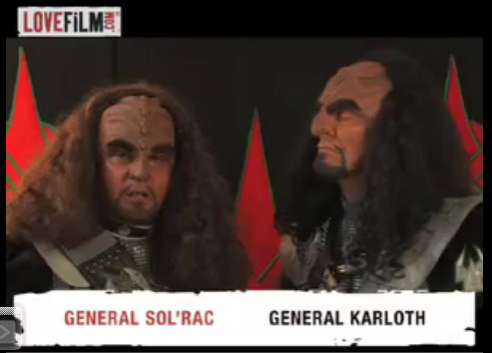
The World’s First Film Review In Klingon was shot in our office. After filming, the two guys fell out over the fee and had a full blown shouting match…in Klingon!

The Ultimate Superhero and Villain (above). The composite story technique served us well through the years albeit I put an end to it after a “no more Ultimates, please” journo request.

 A load of old Barnum.